The Straight Answer: Most AC Problems Have One Failed Part
When we get a call about an AC that quit in the middle of a Wilson County heat wave, the story is almost always the same: the house is climbing past 80, the family is camped in one cool room, and someone is worried the whole system is shot. Here is the direct answer: it usually isn't. Most air conditioners fail for one specific reason, a worn capacitor, a pitted contactor, a clogged condensate drain, a refrigerant leak, a blower that finally gave out. Our job is to find that one reason instead of guessing at five of them.
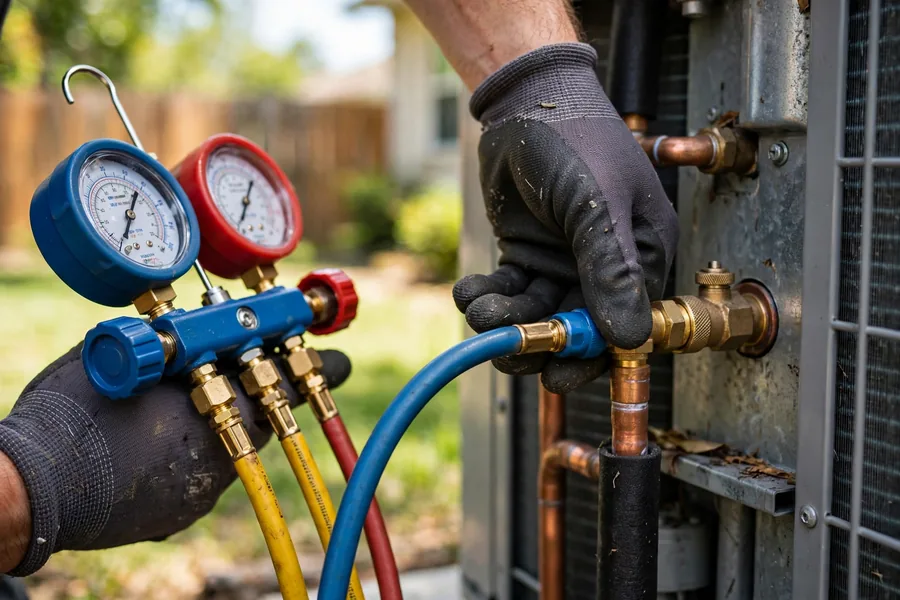
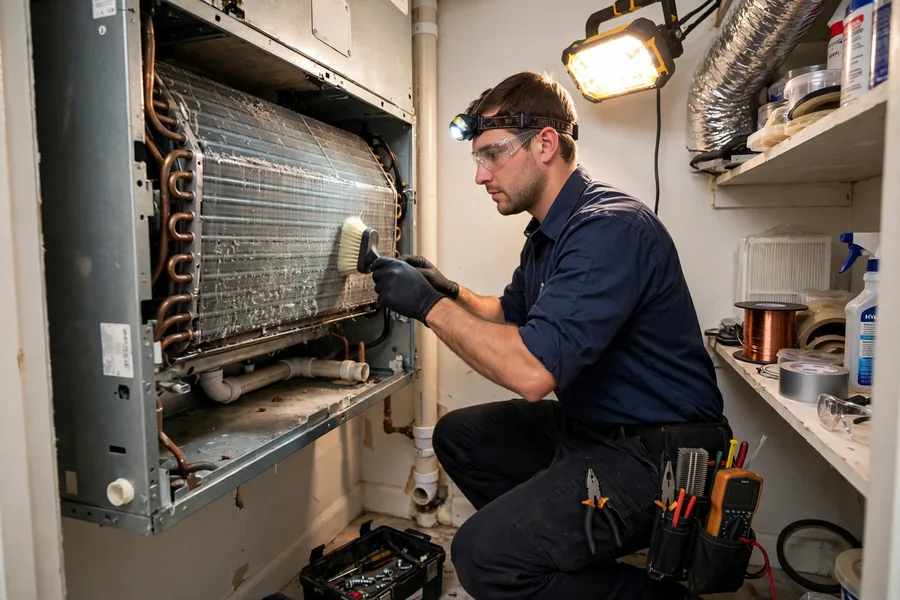
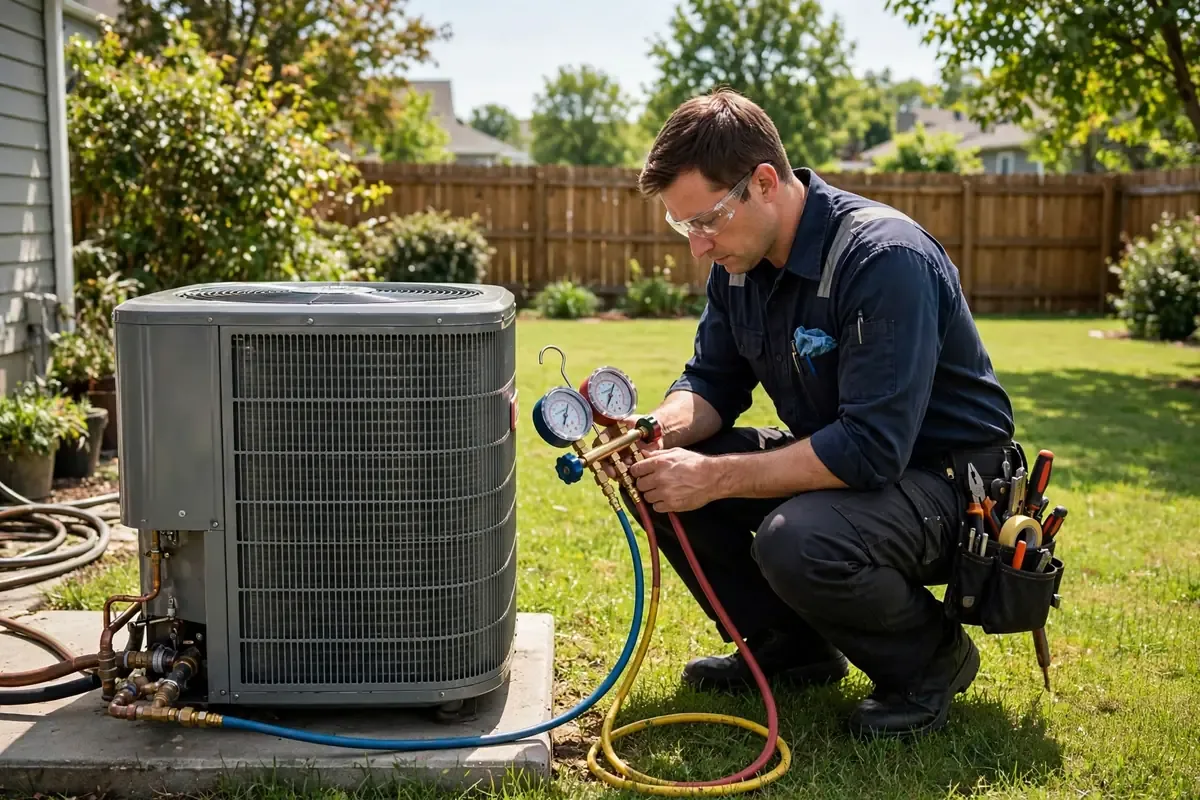
On a typical visit, we start at the thermostat and work outward: thermostat calibration, the indoor air handler, the outdoor condenser unit. We check electrical draw against nameplate ratings, look at the evaporator coil for freeze damage, and measure the refrigerant charge properly. Only then do we quote anything. If you have already been told you need a full replacement by someone else, bring us in for a second opinion before you spend thousands. We have lost count of the "dead" systems that turned out to need a modest repair, and we will never sell you a new unit to solve a small problem.
A Quick Myth Check Before We Go On
Refrigerant is not like gas in your car. It is a sealed system, which means the charge never gets "used up." If your AC is low on refrigerant, there is a leak somewhere, and anyone who refills it without hunting down the leak is selling you a temporary patch. Also, if your breaker tripped, do not keep resetting it and hoping. A breaker that trips twice is protecting you from a deeper electrical fault, and forcing the unit back on can turn a simple fix into a burned-out compressor.