Heating Repair in Mount Juliet, TN
Heating Repair in Mount Juliet, TN
No heat on a cold Wilson County night? Here is the straight answer: most heating breakdowns come down to a failed ignitor, a carbon-coated flame sensor, a blower that quit, or a thermostat that lost its mind. We diagnose it the same day you call, show you exactly what failed, and give you an itemized price before any wrench turns.
Same-day service across Mount Juliet · 24/7 emergency line · Itemized quotes, no pressure
No Heat in Mount Juliet? Here Is What Usually Went Wrong
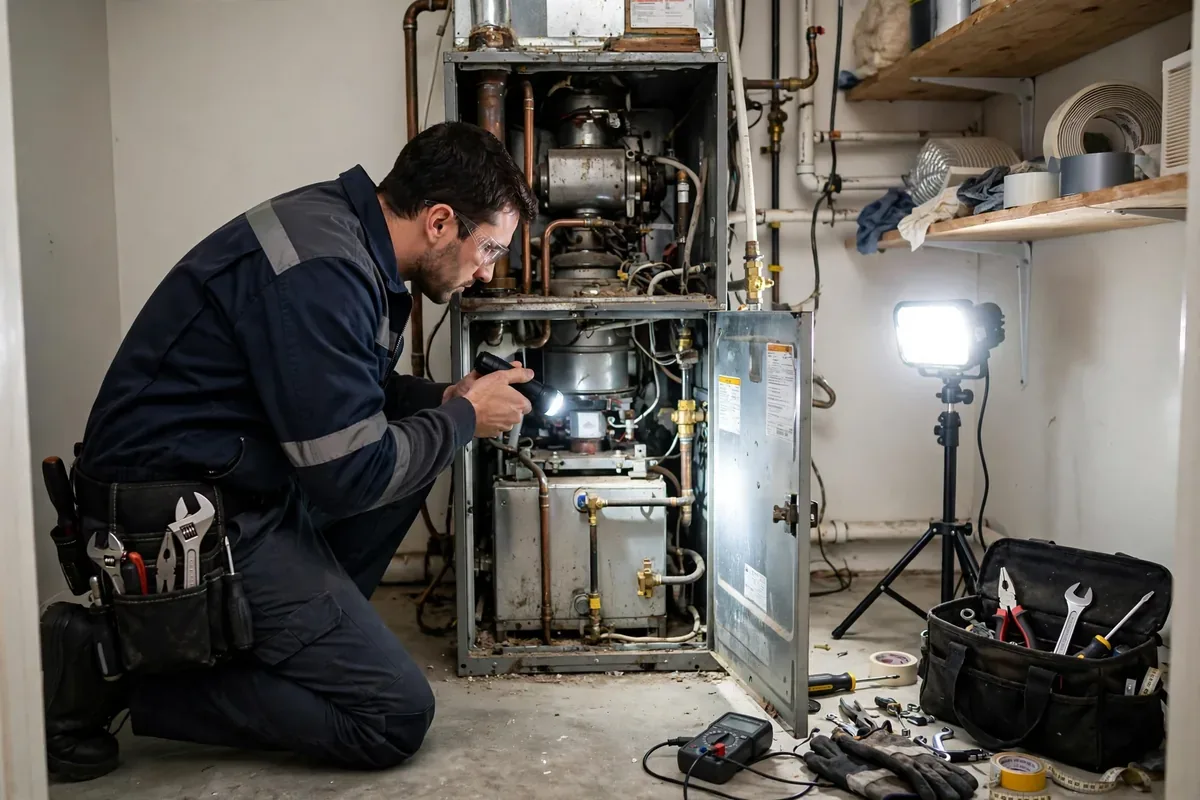
When we get a call about a dead heating system in January, the house is usually sitting in the low 60s and dropping. Middle Tennessee winters are short but sharp: January lows hover around 27°F, and a cold snap with freezing rain will expose every weak link in a heating system at once. The good news is that most of those weak links are small, testable parts, not the whole system.
On a typical visit we work through the system in order. Thermostat call for heat, inducer motor, ignitor glow, gas valve opening, flame proving, blower ramping up. Each step either passes or it doesn't, and the first step that fails tells us where your money should go. That methodical approach is why our techs carry multimeters instead of sales brochures.
Much of Mount Juliet's housing stock was built in the 2000s and 2010s, which means a lot of furnaces and heat pumps in 37122 are now 12 to 20 years old. That is the age when ignitors get brittle, capacitors drift out of spec, and blower motors start drawing high amps. Two-story homes feel it first: heat rises, so a struggling system leaves the upstairs bedrooms cold while the thermostat downstairs insists everything is fine.
What You Can Check Yourself, and What Belongs to a Pro
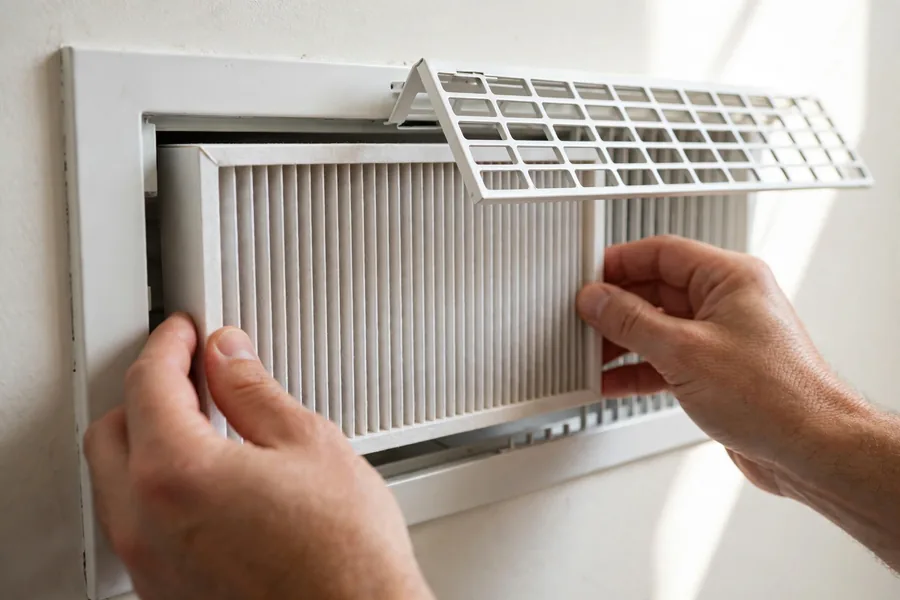
Three checks are genuinely safe for a homeowner. First, make sure the thermostat is set to HEAT and a few degrees above the room temperature; we have lost count of the service calls that ended with a thermostat bumped to COOL or set to 68 in a 66-degree house. Second, pull the furnace filter. If you cannot see light through it, replace it. A packed filter chokes airflow, the heat exchanger overheats, and the high-limit safety switch shuts the burners down. Third, glance at the breaker panel. One reset of a tripped heating breaker is fine.
Everything past the furnace access panel belongs to a technician, and the reasons are not negotiable. Blower circuits run on 240 volts, which can injure or kill. Gas valves and combustion chambers demand combustion-safety testing: a cracked heat exchanger can spill carbon monoxide into your supply air, and there is no homeowner-safe way to check for that. And if your system uses refrigerant (heat pumps do), EPA rules require certified handling. That is the honest boundary: filters and thermostats are yours, fire and high voltage are ours.
How We Fix It: Diagnose, Repair, Verify
Our process is the same on every heating call. You can read the full step-by-step on our our process page; here is the short version.
We find the real failure first
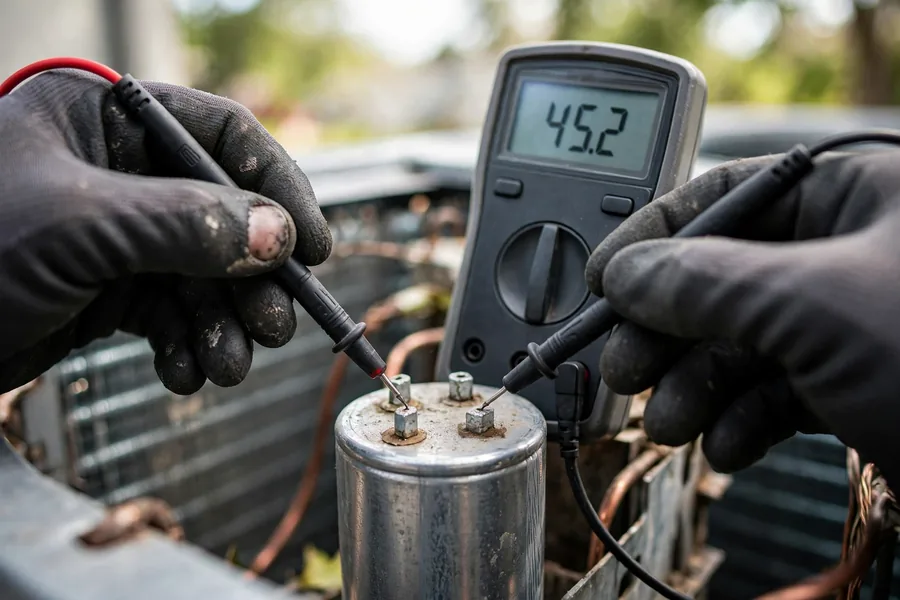
We test instead of guess: meter on the ignitor, eyes on the flame pattern, manometer on gas pressure, amp draw on the blower. The failed part gets shown to you before we quote anything, so you are never paying for our hunches.
We fix what is actually broken
Ignitors, flame sensors, capacitors, blower motors, control boards, thermostats: these are the parts that fail most, and most can be replaced in a single visit. If a modest part restores your heat, that is the repair we recommend. We do not upsell systems to fix parts problems.
We verify the whole heating system
After the repair we check temperature rise across the furnace, take static pressure readings through the ductwork, and run combustion analysis on gas equipment. You get plain-language numbers showing the system is heating safely and moving air the way it was designed to.
A quick word on heat pumps
Many Mount Juliet homes heat with a heat pump rather than a gas furnace, and heat pumps fail differently: a stuck reversing valve, a dead defrost control, or auxiliary heat strips running nonstop because the outdoor unit cannot keep up. If your heat pump blows lukewarm air on a mild day but the backup heat works, the refrigerant circuit or defrost cycle is the likely culprit. Our techs service both sides of the system, so one call covers gas furnaces, heat pumps, and dual-fuel setups. If your equipment uses a heat pump, our heat pump services page goes deeper.
Why Mount Juliet Calls Us When the Heat Quits
Cold houses make people anxious, and anxious people get sold things they do not need. These four commitments are how we keep that from happening on our watch.
We show you the failed part
The cracked ignitor, the swollen capacitor, the flame sensor black with carbon: you will see it with your own eyes before we quote the fix. Transparency is not a slogan here; it is the first step of every repair.
Itemized price before work starts
You approve a written, line-by-line price before we touch a tool. Parts, labor, and any options are listed separately, so there is no $700 surprise invoice after a $99 service call.
Second opinions are welcome
Quoted a full system replacement by someone else? We will re-diagnose before you spend. Plenty of systems declared dead just needed a part, a wire reseated, or a control board.
Options, never pressure
When a repair and a replacement are both reasonable, we lay out both with honest math and let you decide. Our techs are paid to fix things, not to sell boxes.
Repair It, or Start Planning a Replacement?
Not every aging heater needs to be replaced, and not every young one is worth saving. Here is how we think about it on a service call.
| Your situation | What usually makes sense |
|---|---|
| Furnace or heat pump under 10 years old, one failed part | Repair it. A single bad ignitor, capacitor, or sensor does not retire a heating system. |
| System 15+ years old with a cracked heat exchanger | Plan a replacement. A cracked exchanger is a combustion-safety issue, and patching it is not a real fix. |
| Heat pump over 12 years with a dead compressor | Get numbers for both options. A compressor swap on an old heat pump often costs more than the remaining life is worth. |
| Breaker keeps tripping when the heat runs | Do not just keep resetting it. A tripping breaker usually signals a deeper electrical issue that needs a proper diagnosis. |
| Someone else quoted a full replacement | Ask us for a second opinion first. We regularly find systems pronounced dead that needed a modest part. |
One myth worth correcting: bigger is not better with heating equipment. An oversized furnace short cycles, runs loud, and leaves rooms uneven, which is why proper sizing (Manual J load calculation) matters more than raw BTU numbers. If you want the full background on how heating systems work, ENERGY STAR's heating guide is a solid read: energystar.gov. For heat pump specifics, Wikipedia's heat pump overview covers the refrigeration cycle in plain terms.
Heating Repair Across Mount Juliet Neighborhoods
We run heating calls all over 37122, from the west edge near Old Hickory Lake to the retail corridor off I-40. Two areas keep our trucks especially busy each winter:
Hickory Hills
Established brick homes under mature trees, many with original gas furnaces now pushing 20-plus years. We see a lot of worn ignitors and tired blower motors here, plus attic ductwork that has settled and leaks warm air into cold attics. A tune-up before the first freeze goes a long way in this neighborhood.
Triple Crown
Built in sections from 1999 to 2021, so the original sections are right at the age when furnaces, roofs, and water heaters all start asking for attention. Homeowners off Secretariat and Affirmed call us for short-cycling systems and second opinions on replacement quotes that arrived a little too fast.
Your Questions, Answered
Why did my heat stop working all of a sudden?
Most no-heat calls we run trace back to a short list: a failed hot-surface ignitor, a flame sensor coated in carbon, a blower capacitor that gave up, or a thermostat that lost communication with the equipment. Heating systems rarely die without warning, but the warning signs (longer run times, a new rattle, rooms that never quite warm up) are easy to miss in a busy week. On a typical visit we test each suspect in order until we find the actual failure, then show it to you.
What can I safely check before I call for heating repair?
Three things are genuinely safe: confirm the thermostat is set to HEAT and a few degrees above the room temperature, check that the furnace filter is not packed solid (a clogged filter can trip the high-limit safety switch and shut the burners off), and look at the breaker panel for a tripped heating breaker. If the breaker tripped once, you can reset it one time. If it trips again, stop and call us, because a breaker that keeps tripping usually signals a deeper electrical problem.
My furnace keeps turning on and off every few minutes. What's wrong?
That rapid on-off pattern is called short cycling, and on a furnace it usually means the system is overheating and the safety limit keeps shutting it down. The most common cause we find is restricted airflow: a filthy filter, closed-off supply vents, or a blower that is struggling. It can also come from an oversized furnace or a failing limit switch. Short cycling is hard on every component, so it is worth a service call sooner rather than later.
Is it dangerous to run a furnace that smells odd or makes banging noises?
A light dusty smell the first time heat runs in fall is normal and burns off within an hour. Anything beyond that deserves caution: a sharp metallic or electrical smell, soot around the vents, or loud banging when the burners fire can point to delayed ignition or a cracked heat exchanger. If your carbon monoxide alarm sounds, turn the furnace off, get everyone out, and call 911 first, then call us. Combustion safety is the one area where we never tell a homeowner to wait and see.
Another company said I need a whole new heating system. Should I get a second opinion?
Yes, especially if the quote arrived fast and the diagnosis felt thin. We regularly re-diagnose systems that were declared dead and find a failed ignitor, a bad control board, or a wiring issue that costs a fraction of a replacement. A second opinion costs you a service call; skipping one can cost you thousands. We will give you an honest read on whether your system is worth repairing, even if the answer is that it is not.
How quickly can you get to my home in Mount Juliet?
We run same-day appointments across Mount Juliet and the surrounding Wilson County communities during normal hours, and our emergency line is answered 24/7 for no-heat calls on cold nights, weekends, and holidays. Response time depends on the day's call volume, but no-heat calls get priority routing. When you call (615) 706-3036, you will get a real arrival window, not a vague someday.
No Heat? Don't Wait It Out.
Cold houses don't fix themselves, and small heating problems get expensive when they cascade. Call now and we'll get a tech to your door today.
Mon–Fri 7AM–7PM · Sat 8AM–4PM · 24/7 emergency service