Gas Furnace Repair in Mount Juliet, TN
Furnace Repair in Mount Juliet, TN
Gas furnace acting up? Here is what we tell every caller: most furnace failures are ignition or airflow problems, not dead equipment. A bad ignitor, a dirty flame sensor, or a choked filter explains the large majority of no-heat calls we run. We will diagnose yours safely, show you the failed part, and quote an itemized price before we fix it.
Same-day furnace service in 37122 · 24/7 emergency line · Combustion safety checked on every visit
When Your Furnace Misbehaves, Start With What It Is Telling You
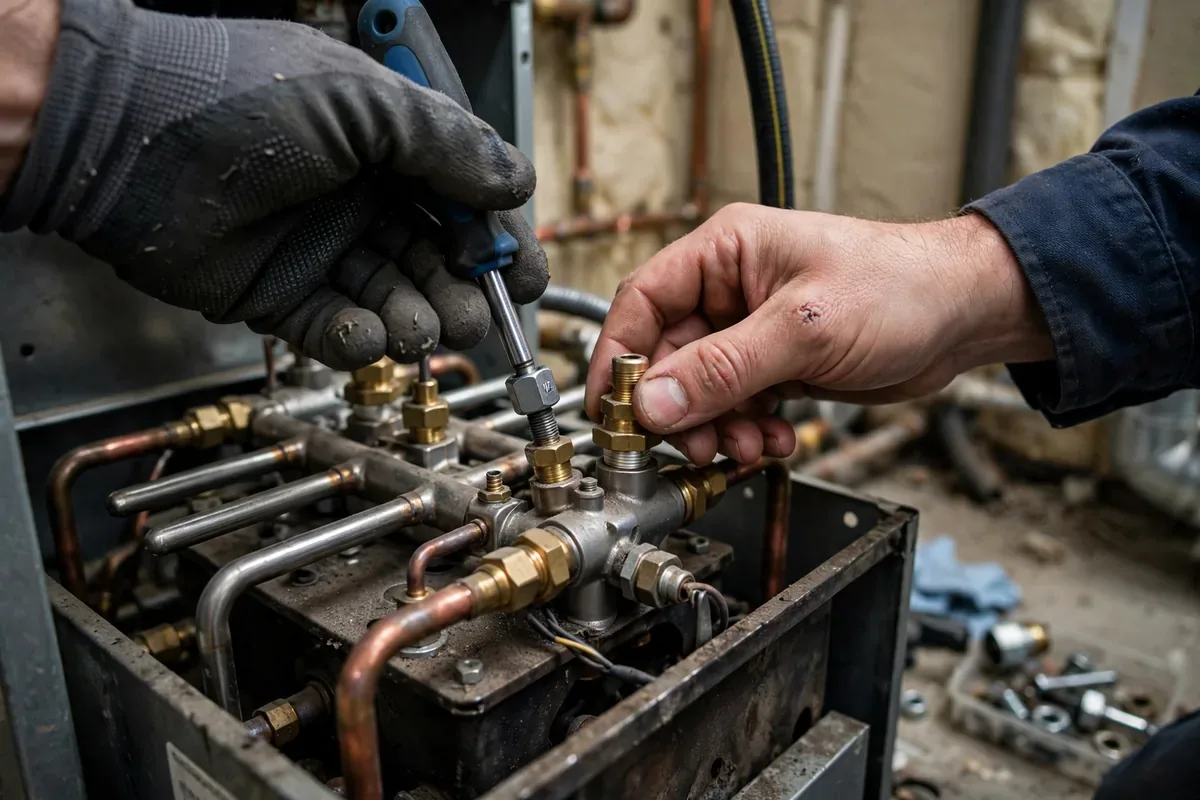
Gas furnaces are talkative machines if you know the language. Clicking that never becomes a flame means the ignitor is trying and failing. A boom on startup means gas built up before ignition caught, which is delayed ignition and needs attention. Cold air from the vents while the blower runs usually means the burners never lit or the flame dropped out. When we get a call about any of these, we already have a shortlist before we pull into the driveway off N Mount Juliet Rd.
A big share of Mount Juliet homes heat with natural gas paired with electric central AC, and many of those furnaces went in during the 2000s building boom. At 15 to 25 years old, they sit right in the window where hot-surface ignitors turn brittle and snap, flame sensors coat over with carbon until they cannot prove flame, and blower capacitors drift out of spec. None of those is a death sentence for the furnace. All of them are verifiable with a meter in about ten minutes.
There is one failure we treat differently from all the rest: a cracked heat exchanger. That metal chamber is the only thing standing between combustion gases and the air your family breathes. Cracks almost always trace back to chronic overheating, and chronic overheating almost always traces back to starved airflow (filthy filters, blocked returns, undersized ductwork). On a typical visit we inspect the exchanger with a camera and run combustion analysis, because a furnace that heats fine but leaks flue gas is not a furnace you keep running.
Safe Checks You Can Do, and the Line You Should Not Cross
Here is the complete homeowner-safe list: confirm the thermostat is calling for heat, swap a dirty filter, make sure the furnace power switch beside the unit is on, and check the breaker. That covers the large majority of the "it was something simple" calls we run.
The line sits at the burner compartment door. Inside that cabinet you have an open flame, a gas valve, and 240-volt blower power sharing tight quarters. Adjusting gas pressure without a manometer, bypassing a limit switch to force heat, or poking at the control board with power on has hurt plenty of confident do-it-yourselfers. Combustion safety and high voltage are the two reasons furnace work past the basics belongs to a licensed tech with the right instruments.
How We Handle a Furnace Call
Every furnace visit follows the same disciplined sequence. The full version lives on our our process page.
Safety and combustion first
Before anything else we check for gas leaks, inspect the heat exchanger, and verify the flue is drafting properly. If anything looks unsafe, the furnace gets shut down and you get a straight explanation of why. No repair quote matters more than this step.
Ignition and airflow diagnostics
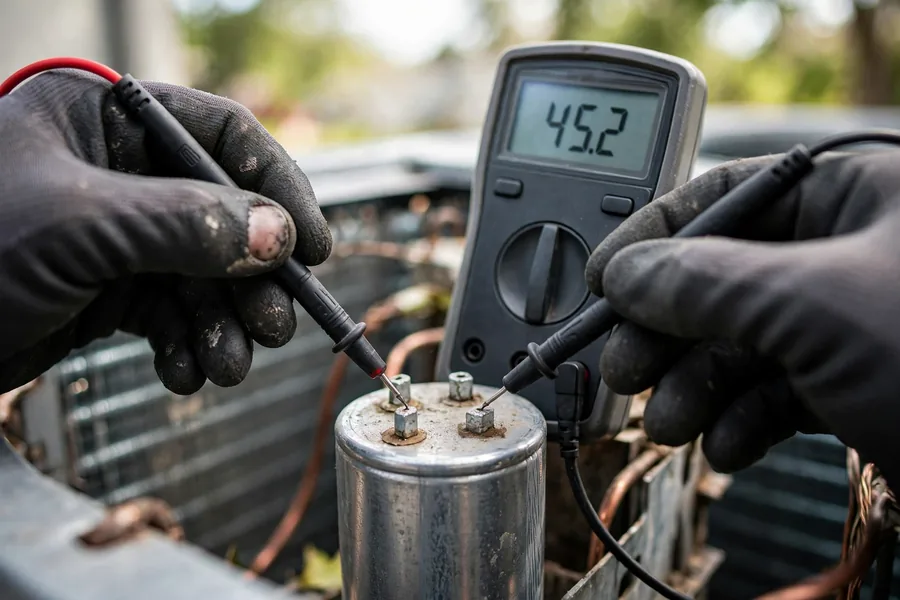
Then we walk the sequence of operation with instruments: inducer proving, ignitor resistance, gas valve opening, flame rectification signal, blower amp draw, and static pressure across the system. The test that fails points at the part that failed.
Repair, then prove it
We replace the failed component, restart the furnace, and re-run the checks: temperature rise within the manufacturer's range, steady flame signal, proper draft. You see the old part, the new part, and the readings. That is what a finished furnace repair looks like.
Why Our Furnace Calls End Differently
Anyone can swap a part. The difference is in what happens before and after the swap.
You see what we see
The snapped ignitor, the carbon-caked flame sensor, the camera view inside your heat exchanger: we put it in front of you and explain it in plain words. If we cannot show you a failure, we do not sell you a repair.
The price is the price
Written and itemized before work begins. You will know what the part costs, what the labor costs, and what your options are. The number we quote is the number on the invoice.
We will double-check big quotes
Told your furnace is done for? We re-diagnose with fresh eyes and real instruments. Second opinions have saved our customers from premature replacements more times than we can count.
You pick the fix
Repair today and plan for later, or replace now: when both paths are reasonable we give you honest numbers for each and step back. No commissioned salespeople, no same-day pressure tactics.
What That Furnace Symptom Usually Means
Homeowners describe the same handful of symptoms over and over. Here is what each one typically points to, and what we check first.
| What you notice | What we check first |
|---|---|
| Furnace runs but vents blow cold or lukewarm air | Whether the burners actually lit: ignitor, gas valve, flame sensor, and thermostat calibration. |
| Clicking repeatedly with no flame | Hot-surface ignitor resistance and the control board's ignition sequence. |
| Loud boom or rumble when burners fire | Delayed ignition: dirty burners, weak ignitor, or improper gas pressure. |
| Burning or electrical smell that will not fade | Overheating components, melting wire insulation, or combustion problems. Shut it down and call. |
| Turns on and off every few minutes | Airflow restriction tripping the high-limit switch: filter, blower wheel, return path, or oversized equipment. |
| Carbon monoxide alarm sounding | Turn the furnace off, leave the house, call 911, then call us. This is not a wait-and-see situation. |
A quick myth correction while we are here: a tripped breaker is not just an annoyance to reset. Breakers trip because something drew too much current, and resetting without finding the cause lets the real problem cook longer. If you want background reading on heating efficiency standards, ENERGY STAR is the authority worth your time: energystar.gov.
Furnace Repair in Mount Juliet Neighborhoods
Gas furnaces from the 2000s building wave are aging out all over Wilson County. These two neighborhoods show the pattern clearly:
Willoughby Station
One of Mount Juliet's earliest large subdivisions, with most homes built in the late 1990s and early 2000s. That puts a lot of original furnaces at 25-plus years: brittle ignitors, tired inducer motors, and heat exchangers that deserve a camera inspection every fall. We run a steady stream of tune-ups and honest repair-vs-replace conversations here.
Hickory Hills
Established brick homes under mature trees on the west edge near Old Hickory. The furnaces here are often original to the house, and the mature landscaping means outdoor vents and flues sometimes get crowded by growth. We check clearances and combustion air on every visit, not just the failed part.
Your Questions, Answered
What are the signs my gas furnace needs repair?
The ones we hear about most: the furnace runs but the air from the vents never gets warm, it clicks repeatedly without firing, it fires up then shuts down minutes later, you hear new rattling or booming on startup, or your gas bills climb while comfort drops. Any one of these means something in the ignition, airflow, or combustion sequence is off. A furnace that still heats but sounds different than last winter is asking for attention before the next cold snap.
My furnace smells like burning when it first kicks on. Is that normal?
On the first cold night of fall, a light dusty odor that fades within an hour is just dust burning off the heat exchanger, and it is normal. What is not normal: the smell persisting for days, a sharp electrical or melting-plastic odor, the smell of gas, or visible soot around supply registers. Those point to overheating components, delayed ignition, or a combustion problem, and the furnace should be shut off and checked.
Can a cracked heat exchanger really be dangerous?
Yes. The heat exchanger is the metal chamber that keeps combustion gases separate from the air blowing into your home. When it cracks, carbon monoxide and other flue gases can mix into your supply air. Cracks usually come from years of overheating, often caused by restricted airflow from dirty filters or undersized ductwork. This is why we inspect the exchanger with a camera and run combustion analysis on every gas furnace call: it is the single most important safety check we perform.
Why does my furnace turn on and off constantly?
Constant on-off cycling usually means the furnace is overheating and the high-limit switch keeps cutting it off to protect itself. In our experience the cause is restricted airflow more often than a bad part: clogged filters, blocked return grilles, or a blower wheel caked with dust. It can also be a furnace that was oversized for the house when it was installed. Either way, the cycling wears out ignitors and motors fast, so get it looked at.
Is there anything I can check on my furnace myself?
Yes, a few safe basics. Make sure the thermostat calls for heat and is set above room temperature, replace a dirty filter, confirm the furnace power switch (it looks like a light switch near the unit) is on, and check the breaker. That is the full safe list. Do not open the burner compartment, do not adjust the gas valve, and do not bypass safety switches to force the furnace to run. Gas and 240-volt power inside one cabinet is exactly the combination that hurts do-it-yourselfers.
How long should a gas furnace last in Tennessee?
A well-maintained gas furnace in Middle Tennessee typically runs 15 to 20 years, since our heating season is shorter than in the Midwest. The furnaces we condemn most often are 18-plus-year units with cracked heat exchangers or obsolete control boards. If your furnace is under 15 and the problem is a single component, repair almost always wins. Past 20 with repeated breakdowns, replacement math starts looking better. We will show you both sides honestly.
Furnace Trouble? Get It Checked Today.
Ignition problems and airflow issues only get worse with time. Call now and a technician will diagnose it safely, today.
Mon–Fri 7AM–7PM · Sat 8AM–4PM · 24/7 emergency service