Ductwork Repair & Installation in Mount Juliet, TN
Ductwork Repair & Installation in Mount Juliet, TN
Here is the uncomfortable truth about many Mount Juliet homes: the AC is fine, but the ducts are quietly bleeding comfort into the attic. Leaky, crushed, or badly routed ductwork wastes the most expensive air you own. We find the leaks with instruments, seal or replace what is failing, and prove the improvement with real airflow readings.
Attic-to-register inspections · Photo documentation · Itemized quotes before work
The Invisible Problem Above Your Ceiling
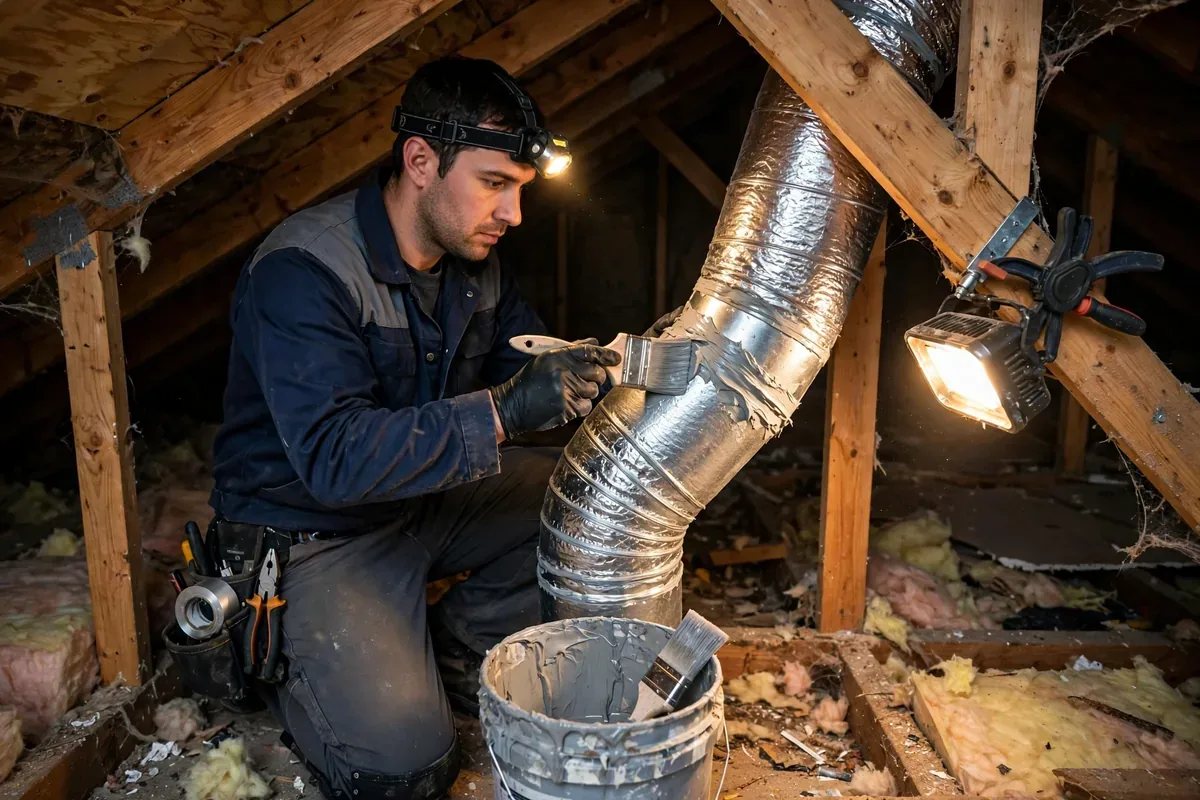
Most homeowners never think about their ducts, which is exactly why duct problems go undiagnosed for years. The equipment gets blamed: the AC must be undersized, the furnace must be dying. But when we get a call about a bedroom that will not cool or bills that keep climbing, the first place we look is the attic. Time after time we find the same story: supply boots leaking at the ceiling, flex duct crushed where someone stepped on it, return plenums pulling 130-degree attic air straight into the system.
Mount Juliet's housing makes this worse in specific ways. Two-story homes with bonus rooms over garages are duct nightmares when the original runs were undersized. Attic air handlers, common in local construction, sit in brutal summer heat, so every leak in the nearby ductwork multiplies its damage. And the 2000s-era flex duct in many 37122 attics is now old enough that the outer insulation has degraded while the inner liner sags. The system works harder every year for less comfort, and the homeowner just assumes that is normal aging.
On a typical visit we do not guess about any of this. We walk the accessible ductwork with a camera and a light, photograph every suspect joint, and take static pressure readings that show exactly how hard your blower is laboring. Then we show you the photos. Unseen air loss stops being abstract when you are looking at a disconnected return pulling attic dust into your living room.
What We Can Fix, and What the Ducts Themselves Decide
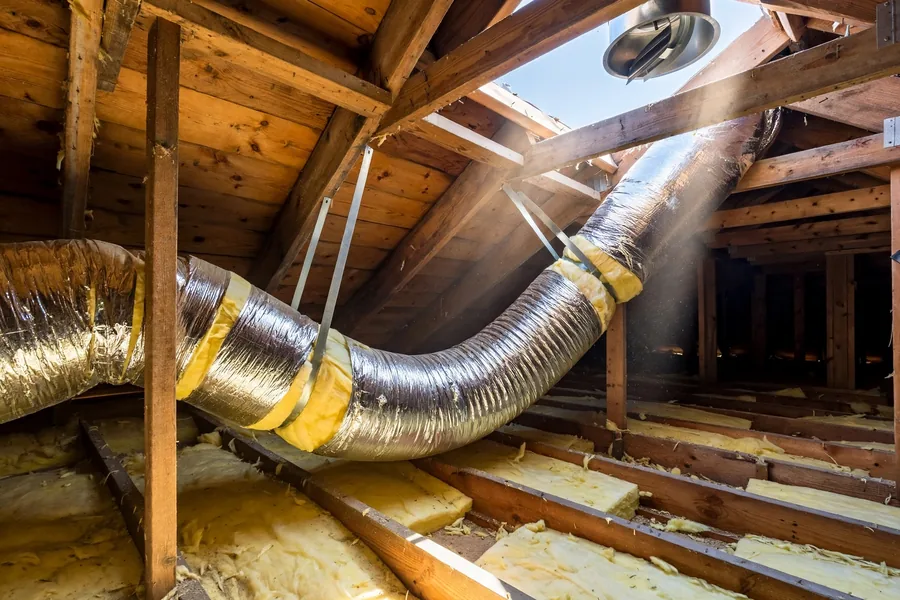
Sealing is the workhorse fix: mastic and proper mechanical fastening on every joint, boot, and plenum connection. When the ducts are correctly sized and the insulation is sound, sealing alone can transform a house. Repair covers the middle ground: replacing crushed flex runs, reconnecting separated boots, adding missing return-air paths so closed bedroom doors stop pressurizing rooms.
Sometimes the ducts themselves make the decision for us. Undersized trunk lines, insulation that has failed across whole runs, or layouts that never matched the floor plan cannot be sealed into working. In those cases we design replacement ductwork to proper sizing standards and install it cleanly, with supports that keep flex duct from sagging again. We will always show you why replacement is the call, with photos and pressure readings to back it up.
How We Handle a Ductwork Call
Methodical, documented, and proven with measurements. The visit flow in full is on our our process page.
We measure the loss
Full attic and crawl space inspection, photos of every problem joint, and static pressure readings that quantify what the duct system is costing your blower. You see the evidence before we propose anything.
We seal and repair
Mastic-sealed joints, reconnected boots, replaced crushed runs, and proper supports throughout. Most sealing and repair jobs finish in a single day, and we leave the attic access cleaner than we found it.
We prove the improvement
After the work we re-take pressure readings and check airflow at the registers, room by room. If your new AC installation is on the horizon, proper ducts make sure it performs to its rating instead of fighting the house.
Why Our Ductwork Stands Up to Inspection
Ductwork is hidden, which makes it the easiest place in HVAC to cut corners. We do the opposite.
Photo evidence, always
You cannot watch us work inside your attic, so we bring the attic to you: photos of every leak, crush, and disconnection before we quote, and photos of the finished work after.
Itemized before we start
Sealing, repair, and replacement are priced as separate line items. You will know exactly what each part of the job costs and why it is on the list.
Second opinions welcome
Quoted a full duct replacement elsewhere? We will inspect independently and tell you honestly whether sealing would do the job. Smaller fixes beat bigger invoices when they are sufficient.
No-pressure options
Seal now and monitor, repair the worst runs, or replace the system: we lay out the trade-offs in plain language and let you decide what fits your budget.
Duct Symptoms and What They Point To
If any of these sound like your house, your ducts deserve a look before your equipment gets blamed.
| What you notice | Likely duct cause | What we do |
|---|---|---|
| One room always too hot or cold | Undersized or crushed supply run, missing return path | Trace airflow room by room; resize or reroute the run |
| Dust puffing from vents at startup | Leaky returns pulling attic or crawl space air | Seal return-side leaks; verify with pressure readings |
| Bills climbing, equipment seems fine | Supply leaks dumping conditioned air into the attic | Seal joints and boots; re-measure static pressure |
| House feels humid despite the AC running | Return leaks drawing in humid outdoor air | Seal returns; check indoor air quality balance |
| Whistling or noisy vents | Undersized ducts forcing high-velocity airflow | Evaluate trunk sizing; add returns or enlarge runs |
Worth knowing: the U.S. Department of Energy's efficiency resources cover duct sealing as one of the highest-return improvements a homeowner can make, and ENERGY STAR's guidance agrees: energystar.gov. If your ducts check out but comfort still lags, our AC repair team can evaluate the equipment side.
Ductwork Trouble Spots in Mount Juliet
Two areas where we see duct problems constantly:
Providence
The townhomes and newer builds around Providence Marketplace often have complex duct layouts serving multiple levels, and bonus rooms that were clearly an afterthought in the original design. We rebalance a lot of these homes: resizing a run here, adding a return there, sealing the boots the builder left leaky.
Triple Crown
Original sections built from 1999 onward have flex duct that is now 20-plus years old, with insulation breaking down in hot attics. Homeowners on streets like Secretariat and Citation call us about rooms that never cooled right even when the system was new. A full evaluation usually finds the ducts were the weak link all along.
Your Questions, Answered
How do I know if my ducts are leaking?
The telltale signs: one or two rooms that never match the thermostat, energy bills climbing while the equipment seems fine, visible dust puffing from registers when the system starts, and ducts in the attic that look crushed, kinked, or disconnected. The definitive answer comes from testing: we measure static pressure and inspect every accessible joint. A local duct changeout we studied showed how much comfort leaky ducts quietly steal, and the homeowners had blamed the AC for years.
Is duct sealing worth it, or should I just replace the ducts?
It depends on the ducts' condition. If the runs are properly sized and the insulation is intact, sealing the joints and connections usually delivers the best return for the money. If the ducts are crushed, undersized, sweating from failed insulation, or routed so badly that rooms cannot be balanced, replacement is the honest recommendation. We show you photos of what we find in your attic and give you both numbers when both paths are viable.
Why is one room in my house always hotter or colder than the rest?
Uneven rooms are a duct problem more often than an equipment problem. Common causes we find: a supply run that is undersized for the room, a crushed flex duct in the attic, no return-air path (the room pressurizes and supply air cannot get in), or a damper that was closed years ago and forgotten. Bonus rooms over garages are the classic case in Mount Juliet's two-story homes. We trace the actual airflow to each room instead of guessing.
Can leaky ducts really raise my energy bills that much?
Yes. Duct leakage is one of the largest hidden energy losses in a home because it wastes the most expensive air you own: conditioned air. Supply leaks dump cooled or heated air into the attic, and return leaks pull hot, humid, dusty attic air into the system, which your equipment then has to condition. Sealing those leaks means the system you already paid for finally delivers what it was rated to deliver.
What does a ductwork visit actually involve?
We inspect every accessible duct run, joint, and connection, photograph problem spots, and measure static pressure to see how hard your blower is working against the duct system. Then you get an itemized plan: what gets sealed, what gets repaired, and what, if anything, should be replaced. Most sealing and repair work is completed in a day, and we clean up the attic access when we leave.
Should ducts be cleaned or sealed?
They solve different problems. Sealing fixes leaks that waste energy and pull in dirty air; cleaning removes buildup inside ducts that are otherwise sound. If your ducts leak, cleaning alone is money poorly spent because dirty air keeps entering. We usually recommend sealing first, then cleaning only if the interior buildup warrants it. Be wary of anyone who pushes cleaning without ever mentioning sealing.
Stop Heating and Cooling Your Attic.
One inspection shows you exactly where your conditioned air is going. Call now and get answers with photos to prove them.
Mon–Fri 7AM–7PM · Sat 8AM–4PM · 24/7 emergency service