Sizing Guide
What Size Air Conditioner Do You Need?
Picking the right tonnage is the biggest decision in an AC replacement. Too big and it short-cycles; too small and it never catches up on a July afternoon in Mount Juliet. Here is how sizing actually works.
Plain-English guide · Free sizing advice on every call
The Short Answer: It Is Not Just Square Footage
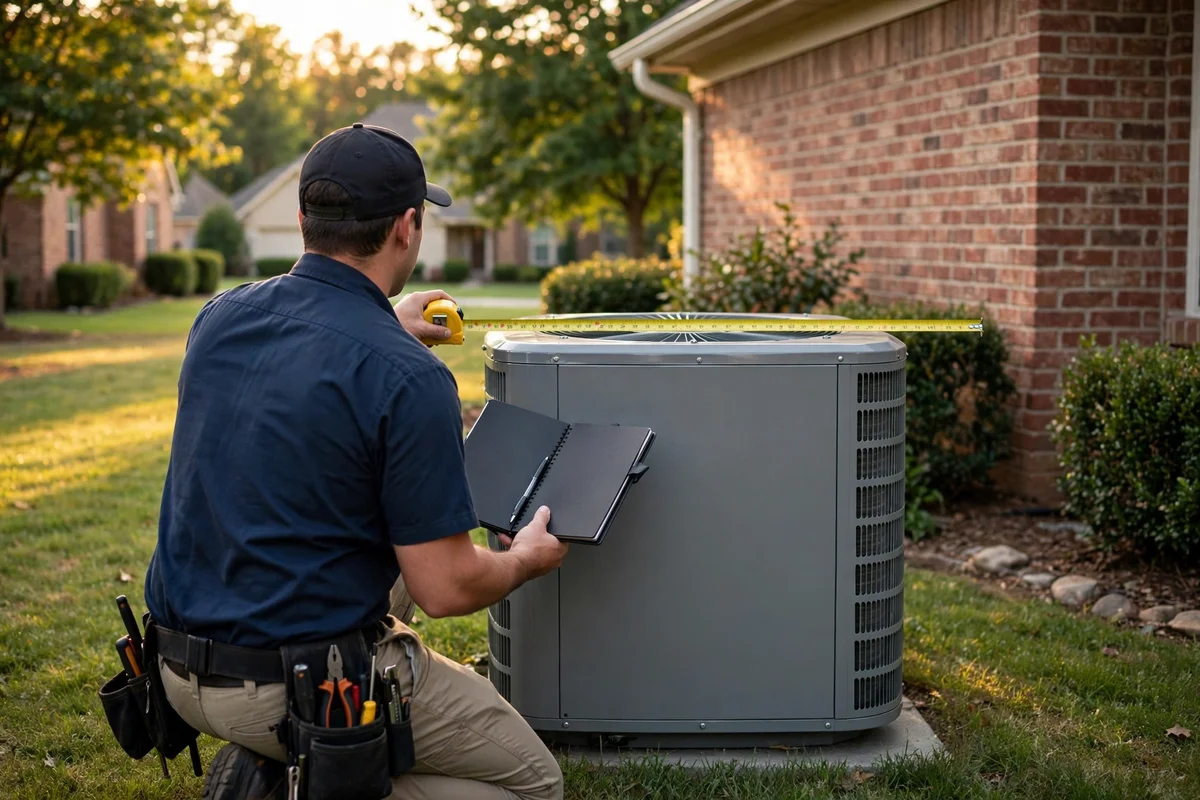
The right size for your cooling system comes from a load calculation, not a rule of thumb. Square footage is a starting point, but two 2,400-square-foot homes in Mount Juliet can need very different equipment: one faces west with tall ceilings and leaky ducts, the other is shaded with tight construction from the 2010s. That is why the rough ranges further down this page are starting points, not recommendations.
The only way to know your home's right size is a proper Manual J load calculation done in person, which we perform free with every replacement quote. If a contractor hands you a tonnage without measuring a single room, that is your cue to get a second opinion.
What "Tonnage" Actually Means
One ton of cooling equals 12,000 BTU of heat removed per hour. So a 3-ton air conditioner moves 36,000 BTU of heat out of your home every hour it runs. Common residential sizes run from 1.5 to 5 tons in half-ton steps.
Tonnage describes cooling capacity, not weight and not physical size. A bigger tonnage moves more heat per hour, full stop. Most homes we size around Wilson County land between 2 and 4 tons, but that is a pattern we have noticed, not a prescription for your house.
One more distinction worth knowing: tonnage tells you capacity, while the SEER2 rating tells you efficiency, meaning how much cooling you get per unit of electricity. They are two different numbers and both matter when you are choosing equipment.
Why Bigger Is Not Better
An oversized unit blasts cold air, satisfies the thermostat fast, and shuts off before the evaporator coil has had time to pull humidity out of the air. In our humid subtropical summers, with July humidity around 74 percent, that leaves the house feeling cool but clammy at the same time. The thermostat reads 72 while your skin tells a different story.
Short cycling also wears parts out faster. Compressors, contactors, and capacitors all take their hardest beating at startup, so a system that starts and stops ten times an afternoon ages quicker than one that runs long, steady cycles. And oversizing creates uneven rooms: the hallway with the thermostat is satisfied while the bonus room upstairs over the garage in a two-story home lags behind.
A right-sized unit runs longer, steadier cycles, wrings the moisture out of the air, and keeps temperatures even from room to room. That is the comfort difference people feel but cannot quite name.
What Pros Weigh Before Recommending a Size
When we get a call about sizing, we are really auditing the whole house, not just reading a tape measure. Here is what goes into the decision:
- Square footage and layout. How big the home is, how many stories, and whether rooms are open or closed off from each other.
- Insulation and air sealing. Late-1990s homes in Willoughby Station often leak more conditioned air than 2020s builds in Stonehollow or Nichols Vale, and that changes the math.
- Windows. Size, age, and direction. West-facing glass on a Providence townhome adds real afternoon heat load that a shaded home does not have.
- Ductwork condition and design. Leaky or poorly designed attic ducts can waste a surprising share of cooling before it ever reaches a vent. We check static pressure to see what the ducts can actually move.
- Ceiling height. Nine- and ten-foot ceilings, vaulted great rooms, and bonus rooms add volume that square footage alone misses.
- The Manual J load calculation. This is the industry-standard math that rolls all of the above into one number. On a typical visit we measure each room, note windows and insulation, and run the calculation in front of you so you can see where the number came from.
Rough Starting Ranges (Emphasis on Rough)
The chart below is the kind of thing contractors keep in their heads. Treat it as a starting point for a conversation, not a shopping list. Every range assumes average insulation and ductwork, and Mount Juliet homes are anything but average.
| Home size (sq ft) | Common starting range |
|---|---|
| 1,000-1,400 | Often 1.5-2 tons |
| 1,400-1,800 | Often 2-2.5 tons |
| 1,800-2,200 | Often 2.5-3 tons |
| 2,200-2,800 | Often 3-3.5 tons |
| 2,800-3,500 | Often 3.5-5 tons |
A shaded 2,200-square-foot brick ranch near Old Hickory Lake can land at the bottom of its range, while a two-story with a bonus room off Lebanon Rd can land at the top. The chart gets us in the neighborhood. The in-person Manual J visit finds the house.
Replacement Is Your Chance to Fix an Old Sizing Mistake
Many of the systems we replace were the wrong size from day one. Builders and budget installers have a long habit of oversizing "just to be safe," and that oversized unit has been short-cycling for 15 years. If your current system never quite dehumidified, ran in short bursts, or left upstairs rooms warm, tell us when we visit.
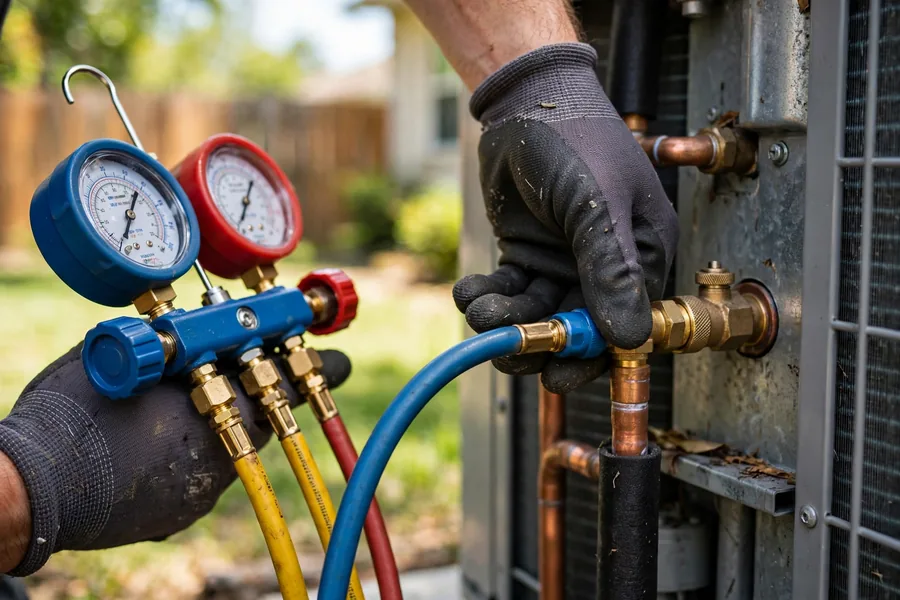
We will measure the house fresh, check the duct system's static pressure, and size the new equipment to the home, not to the old nameplate. Then we verify the refrigerant charge with superheat and subcooling readings at startup, because the right size only performs right when the charge is right. You can see exactly how we work on our process page.
And if another company already quoted you a replacement size, we will re-check the math before you spend a dime. That second-opinion habit is one of the things our customers in the 37122 count on.
Related Reading
Your Questions, Answered
What does 'ton' mean for an air conditioner?
It is a unit of cooling capacity, not weight. One ton means the system can remove 12,000 BTU of heat from your home per hour. So a 3-ton air conditioner moves 36,000 BTU per hour. The term dates back to the cooling power of a ton of ice, but today it is simply how the industry measures how much cooling a system delivers.
Can I just replace my old unit with the same size?
You can, but it is often a missed opportunity. The old unit may have been oversized from the start, your home may have changed (new windows, added insulation, a finished bonus room), and today's equipment performs differently at part load. When we quote a replacement, we always run a fresh load calculation rather than copying the nameplate. If the math confirms the old size, we will tell you so.
What happens if my AC is too big for my house?
It cools the air quickly and shuts off before the coil can pull moisture out of it, so the house feels cool but clammy. Those short cycles also wear out the compressor and electrical components faster and can leave distant rooms uneven. In a humid climate like ours, oversizing is one of the most common comfort complaints we see.
What happens if my AC is too small?
It runs constantly on hot afternoons and still loses ground: indoor temperatures creep up and the system never gets a break. That nonstop operation drives up electric bills and shortens equipment life. Undersizing is less common than oversizing, but we see it in homes where additions or bonus rooms were never factored into the original sizing.
How do you figure out the right size for my home?
With a Manual J load calculation. We measure each room, note ceiling heights, window sizes and orientation, insulation levels, and air leakage, then check the duct system's design and static pressure. The math produces the exact cooling load, and we match equipment to it. The visit is free with a replacement quote, and we will show you the numbers.
Get the Size Right the First Time
A free load calculation with every replacement quote. No guessing, no oversized equipment.
CALL NOW · (615) 706-3036