Seasonal Checklist
Spring AC Tune-Up Checklist for Mount Juliet Homes
What to handle yourself before the heat arrives, and what a real maintenance visit covers, so your system isn't learning it's broken in July.
Book March–May · Hour-plus real inspections · No upsell bait
The Short Version
Middle Tennessee heat doesn't ease in; it shows up. A spring tune-up catches the weak capacitor, the low refrigerant charge, and the clogged drain before they're a 95-degree emergency. Do the easy homeowner steps below in late March or April, then book a real maintenance visit. A thorough tune-up takes an hour or more and ends with a system that's verified, not guessed at.
Your DIY Steps (Safe, No Tools Required)
These are genuinely safe homeowner tasks. No panels to open, no electricity to touch.
- Swap the air filter. Fresh filter, correct size, airflow arrow pointing toward the blower. If you haven't changed it since fall, it's overdue.
- Clear two feet around the outdoor unit. Pull weeds, rake leaves, move the mulch pile back. The condenser needs breathing room on all sides.
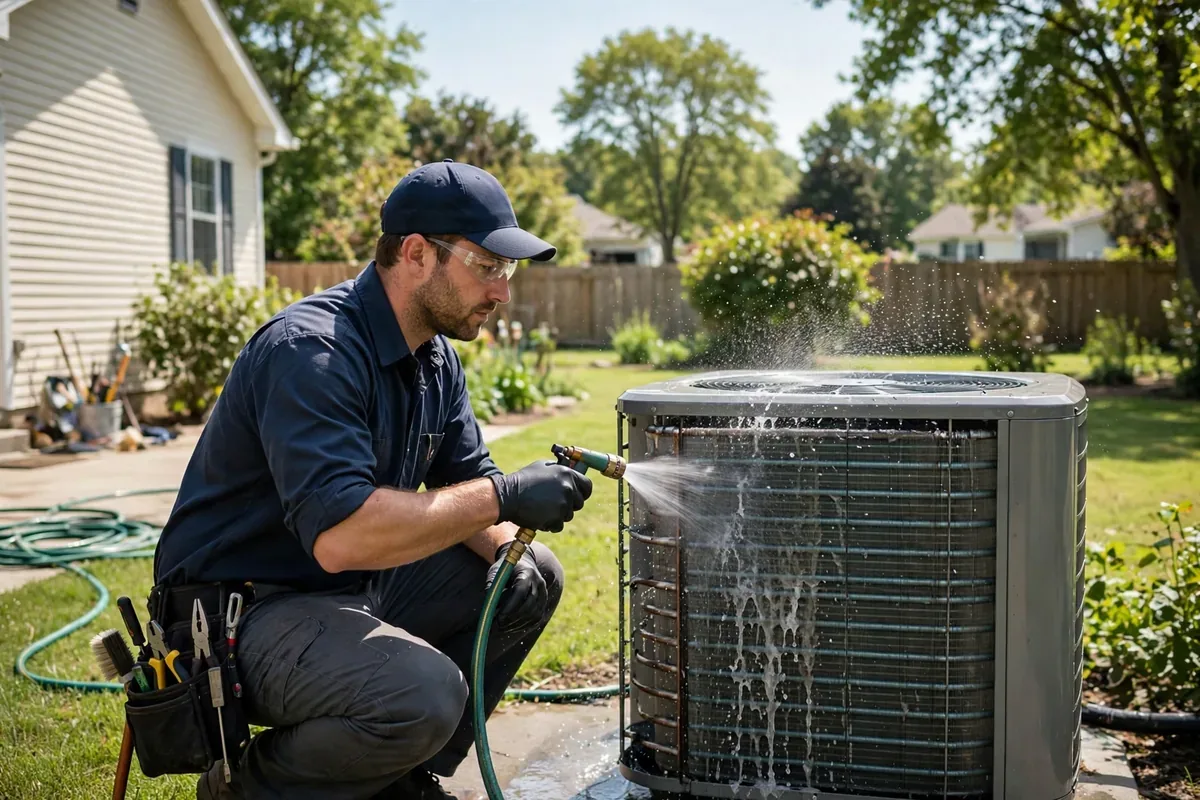
- Gently rinse the condenser coils. Power off at the outdoor disconnect, then rinse from the outside in with a regular garden hose. No pressure washer, no chemicals: bent fins are permanent.
- Walk the house and open every supply vent. Closed vents don't save energy; they raise static pressure and strain the blower. Make sure furniture and rugs aren't blocking returns.
- Test the thermostat. Set it to cool, drop the setpoint five degrees below room temp, and confirm the system responds. Dead batteries and post-outage schedule glitches are spring classics.
- Look at the condensate drain's outside end. If it's dripping steadily on a humid day, it's flowing. If it's dry while the AC runs hard, note it for the tech.
- Listen on the first hot-day run. Grinding, screeching, or loud banging from the outdoor unit means shut it down and call; don't run it "to see."
What a Pro Tune-Up Covers (And Why It's Pro Work)
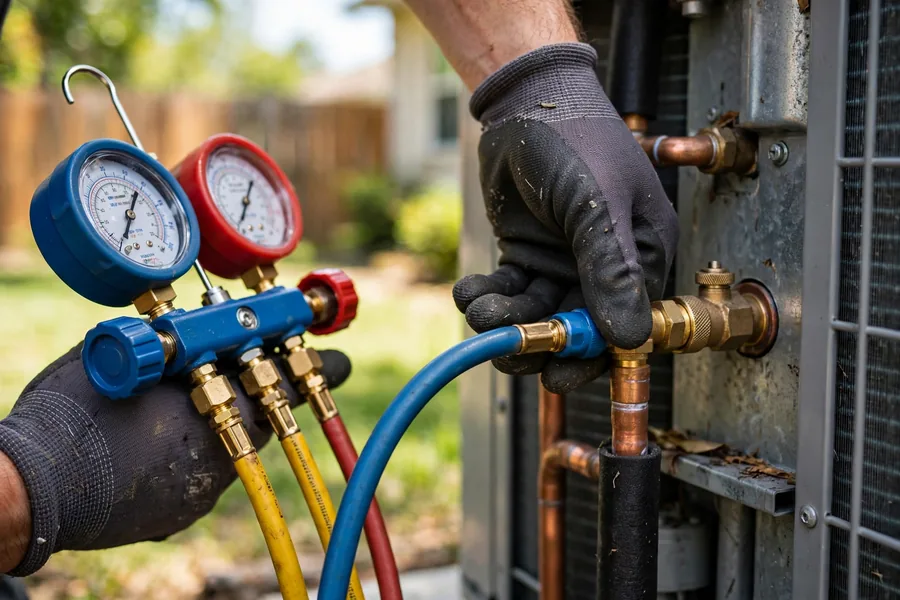
Everything below involves 240-volt electricity, sealed refrigerant circuits, or measurements that require training and instruments. That's the boundary, and the reason a real tune-up can't be done in fifteen minutes.
| Pro task | Why it matters |
|---|---|
| Refrigerant charge verification (superheat/subcooling) | Wrong charge kills efficiency and can destroy the compressor |
| Electrical connection tightening and amp-draw tests | Loose 240V connections arc, overheat, and start fires |
| Capacitor and contactor testing | The two most common summer failures: cheap to catch, expensive to miss |
| Indoor evaporator coil inspection and cleaning | A matted coil is the top cause of frozen coils and weak cooling |
| Condensate drain flush and float-switch test | Prevents the mid-summer shutdown (or ceiling leak) nobody wants |
| Blower and airflow verification | Confirms the system can actually move the air it's cooling |
| Thermostat calibration check | A misreading thermostat causes short cycling and uneven rooms |
| Safety control testing | Verifies the protections that shut the system down before damage happens |
Timing It Right in Wilson County
Book your tune-up between late March and May. You'll get your pick of appointment times, and any repairs we find get handled before the first real heat wave, not during it, when every HVAC company in the county is booked solid. If your system is pushing 12–15 years (common in Willoughby Station and the older Triple Crown sections), an early-spring visit also gives you time to plan a replacement on your schedule instead of the weather's.
And a word of caution about those $49 tune-up specials you see advertised each spring: a genuine maintenance visit takes an hour-plus of skilled labor. When the price is suspiciously low, the visit is usually a sales call wearing a tool belt.
Related Reading
Your Questions, Answered
When should I get my AC tuned up in Mount Juliet?
Late March through May, before the first stretch of 85-degree days. Booking early beats the June rush, when everyone's calling at once and schedules tighten up. If your system is 10 years or older, earlier is better.
Can I clean my AC condenser coils myself?
You can safely rinse the outdoor condenser coils with a garden hose (power off at the disconnect first) and clear debris from around the unit. Skip chemical coil cleaners and pressure washers: bent fins block airflow permanently. The indoor evaporator coil should be left to a tech.
How do I know my tune-up was actually thorough?
A real tune-up takes an hour or more and covers refrigerant readings, electrical testing, capacitor checks, coil inspection, drain flushing, and airflow verification. If the tech was in and out in 15 minutes, you bought a sales visit, not a maintenance visit.
Will a tune-up lower my electric bill?
It can. A dirty coil, low refrigerant, or restricted airflow forces the system to run longer and harder. Restoring proper airflow and charge usually trims runtime, and with Middle Tennessee's long cooling season, even small efficiency gains add up over the summer.
What if the tune-up finds a bigger problem?
That's exactly what tune-ups are for: finding small issues before they become July breakdowns. You'll get the findings explained in plain language with an itemized price for any recommended repair, and the decision is always yours.
Beat the Summer Rush: Book Your Spring Tune-Up
One visit, full verification, and a summer without surprises.
SCHEDULE SERVICE · (615) 706-3036