Severe Weather Guide
Storms, Power Outages & Your HVAC System
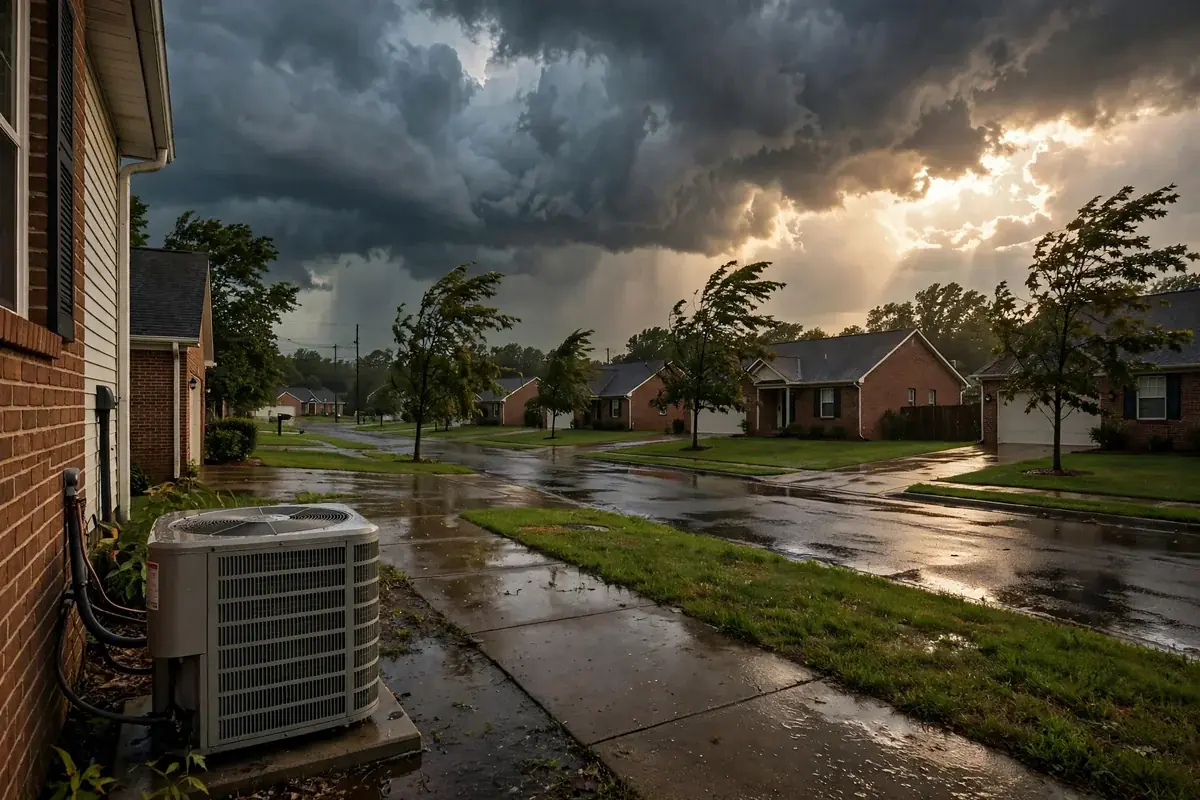
Spring severe storms, summer storm bursts, and the occasional tornado all pass through Wilson County. Here is what severe weather does to your cooling system, and the simple steps that protect it.
Local weather reality · Safety-first advice
The Short Version
Power surges and outages are rough on the most fragile parts of your system: capacitors, control boards, and compressors. The good news is that a little preparation goes a long way.
Before a storm, secure the area around your outdoor unit and make sure everyone in the house knows where the HVAC breaker is. After an outage, give the system a few minutes before restarting it, check the breaker and the thermostat, and call us if the unit will not start or sounds wrong. The rest of this page walks through each step in detail.
Why Middle Tennessee Weather Is Tough on HVAC
Mount Juliet sits in a humid subtropical climate, which means our cooling systems already work hard: July highs near 89 degrees with humidity around 74 percent, and heat indexes routinely topping 100. On top of that heat, spring and fall bring severe storm seasons, summer brings fast-moving storm bursts, and power flickers and outages come with them.
The March 3, 2020 EF3 tornado that struck Mt. Juliet damaged hundreds of homes and is still fresh in local memory. Even storms far less severe than that one can throw debris at an outdoor condenser, knock power out for hours, and send damaging surges through the lines when power returns. Your HVAC equipment is one of the most electrically sensitive appliances in the house, so it tends to be the first thing to show the damage.
How Surges and Outages Damage Your System
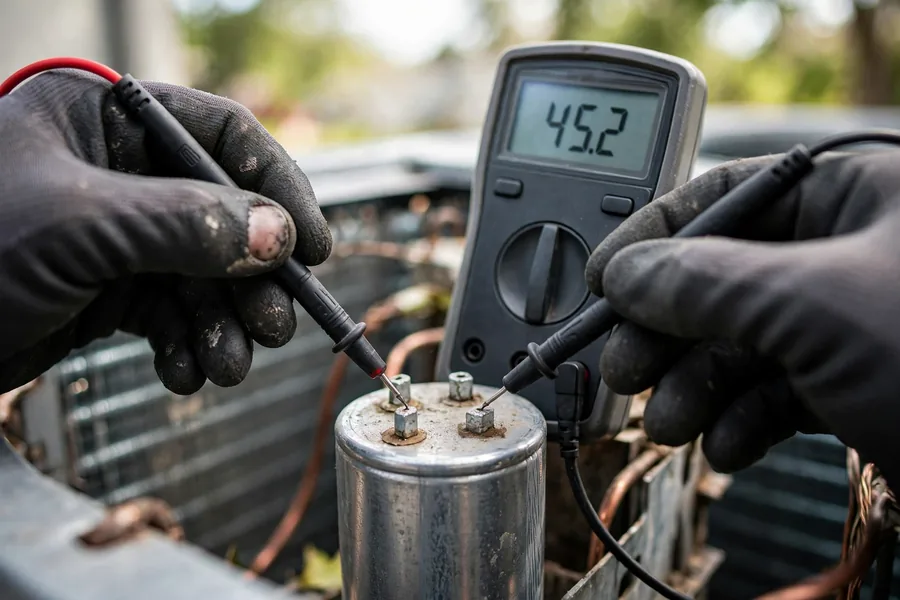
A surge is a spike of voltage, and the small electronics in modern systems do not handle spikes well. Capacitors, which help motors start, can fail outright. Control boards can fry. Thermostat electronics can scramble.
Brownouts are sneakier: voltage sags instead of spiking, and motors try to keep running on too little power, drawing extra current and overheating. That is why a brownout can be harder on a compressor than a clean blackout. Then there is rapid cycling: power flickers off and on within seconds, and the compressor tries to restart against built-up pressure before it has had time to equalize. Repeat that a few times and you can cook a compressor that was perfectly healthy that morning.
When we get calls after a storm, failed capacitors and locked-out control boards are the most common finds, and both are usually straightforward repairs once they are properly diagnosed.
Before the Storm: A Short Checklist
Run through these while the sky is still clear. Each one takes minutes, and together they cover most of the preventable storm damage we see.
- Clear the area around your outdoor condenser. Pick up branches, patio furniture, and anything the wind could throw. The unit needs its normal breathing room too.
- Know where your HVAC breaker is. Label it now, while the lights are on, so nobody is hunting in a dark panel later.
- Ease off the system if a severe storm is imminent. If rough weather is bearing down and you will be away, turn the thermostat up a few degrees or switch the system off. Less runtime during the worst of it means less exposure.
- Consider a whole-home surge protector. Installed at the panel by a qualified electrician, it can absorb spikes before they reach your equipment. It is an electrical product rather than an HVAC one, but it protects HVAC electronics along with everything else in the house.
- Save our number in your phone. If the power is out for hours in July, you will want help fast when it comes back: (615) 706-3036.
After the Power Returns: Restart Carefully
The moment the lights come back is when most post-storm damage happens. Slow down and work through these steps:
- Wait a few minutes. Let the grid stabilize before you ask anything of your system. Rushing to flip everything on the second the lights return is how compressors get hurt.
- Check the breaker. If the HVAC breaker tripped during the event, reset it once. If it trips again, stop: a tripped breaker is usually a symptom rather than the problem, and something downstream needs a professional.
- Check the thermostat. Power events can scramble settings or drain batteries. Confirm it is set to cool, the setpoint is below room temperature, and the display is alive.
- Listen on startup. The outdoor unit should hum to life smoothly. Grinding, a buzz with no start, or the fan spinning while the compressor stays silent are all call-us-now signs.
- When in doubt, call. A quick diagnostic visit after a storm costs far less than running a damaged compressor "just to see" and turning a small repair into a replacement.
Safety Warnings: Read These First
Storms create electrical hazards that go beyond your air conditioner. These rules are non-negotiable:
- Never touch storm-damaged equipment. If the outdoor unit was hit by debris, shifted on its pad, or is sitting in standing water, keep everyone away from it.
- Assume every downed line is live. Stay clear and call the utility. Never move a line yourself, and never let one touch your equipment.
- Keep water away from electrical components. Do not hose down a unit that took on water, and do not open panels to "take a look."
- Never run a damaged unit just to see if it still works. If something looks wrong, sounds wrong, or smells like burning, leave it off and call us at (615) 706-3036.
One informational note: standby generators exist and can keep essentials running through an outage, but sizing and installing one is a separate specialty handled by generator contractors and electricians, not by us.
Related Reading
Your Questions, Answered
Can a power outage damage my air conditioner?
Yes. The outage itself is usually less harmful than what surrounds it: voltage surges when power returns, brownouts where voltage sags, and rapid off-on flickers. Those events stress capacitors, control boards, and compressors, which is why storm-related no-cool calls spike after every major weather event in Wilson County.
What should I do with my HVAC system before a severe storm?
Clear debris and loose objects from around the outdoor unit, make sure everyone knows where the HVAC breaker is, and consider easing the thermostat up or switching the system off if a severe storm is bearing down while you are away. A whole-home surge protector installed by a qualified electrician adds a layer of protection for all your home's electronics, including the HVAC system.
My AC won't start after the power came back on. What now?
Wait a few minutes first, then check the HVAC breaker and reset it once if it tripped. Confirm the thermostat has power and is set to cool below room temperature. If the breaker trips again, or the unit hums, buzzes, or does nothing at all, leave it off and call us at (615) 706-3036. Do not keep resetting a tripping breaker.
Will a surge protector keep my HVAC system safe?
It helps, but nothing makes a system immune. A whole-home surge protector at the electrical panel, installed by a qualified electrician, can absorb many spikes before they reach your equipment. Direct lightning strikes and severe brownouts can still cause damage. Think of it as a seatbelt: valuable protection, not a guarantee.
Is it safe to run my air conditioner during a storm?
Light rain is fine; systems are built for weather. During severe storms with lightning, high winds, or flooding, it is smarter to switch the system off at the thermostat until the storm passes. If the outdoor unit is ever struck by debris, shifted, or sitting in water, keep it off and call us before restarting.
Storm Damage? We'll Check It Out
Post-storm diagnostics around the clock. If your system took a hit, don't run it and hope. Let us look.
CALL NOW · (615) 706-3036